At a glance
- Company: Comerso — B2B SaaS for unsold goods management, ~50 employees, clients include Auchan, Leclerc, Système U, and Decathlon
- Challenge: Proposal creation across multiple disconnected platforms, manual error-checking, and informal deal closing processes slowing a scaling commercial team
- Solution: Qwoty — centralized quote creation, deal tracking, and integrated e-signature
- Result: +15% close rate in 3 months; faster proposals; stronger prospect engagement from first contact
Comerso was founded in 2013 by Pierre-Yves Pasquier, who at the time was a national sales director in a major food group. He saw the same problem every day: companies discarding and destroying unsold products — food and non-food alike — simply because they had no structured way to redirect them. A large part of the population was experiencing food insecurity. The waste was not inevitable; it was an infrastructure problem.
The company he built to solve it has since grown to nearly 50 employees, with clients across major retail and distribution networks in France. Comerso’s platform helps organizations recover, redistribute, and give social value to products that would otherwise be destroyed.
Growth of that kind — moving from a founding team to a structured commercial organization serving large enterprise accounts — creates predictable scaling challenges. The sales process that works for a 5-person team breaks at 50. Valérie Hordé, who leads commercial development at Comerso, experienced this directly. When Qwoty was implemented, what followed was a clear before-and-after for the way her team operates.
The challenge: proposal management that couldn’t keep pace with growth
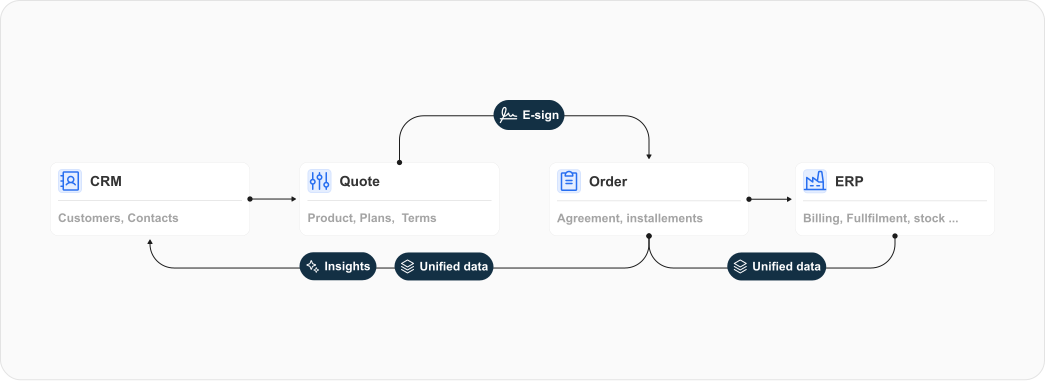
Before Qwoty, creating and managing commercial proposals at Comerso was a genuinely laborious process. The team navigated between multiple platforms — CRM data in one place, pricing information in another, document templates somewhere else — manually verifying each detail to avoid errors before sending anything to a prospect.
« Qwoty truly improved the way we work. Before it was implemented, creating and managing commercial proposals was tedious and took a significant amount of time. We had to navigate between different platforms, manually check every detail to avoid errors — which increased the risk of delays and client dissatisfaction. »
— Valérie Hordé, Head of Commercial Development, Comerso
The consequences of that friction compound at scale. A rep spending extra time on each proposal has less time for prospecting and follow-up. Errors that reach a prospect — wrong pricing, missing product configurations, formatting inconsistencies — affect the perception of professionalism at the earliest stage of the relationship. And the larger the enterprise account, the more costly that first impression becomes.
The structural problem with multi-platform proposal workflows
When a commercial team builds proposals by pulling information from multiple disconnected tools, three things tend to go wrong: data falls out of sync (prices change in the CRM but not the template), errors accumulate at each manual transfer, and the time cost scales with volume. As a company grows, this bottleneck does not self-correct — it gets worse.
The solution: fast, accurate proposals that make an impression from the first contact
Proposals built in minutes, not hours
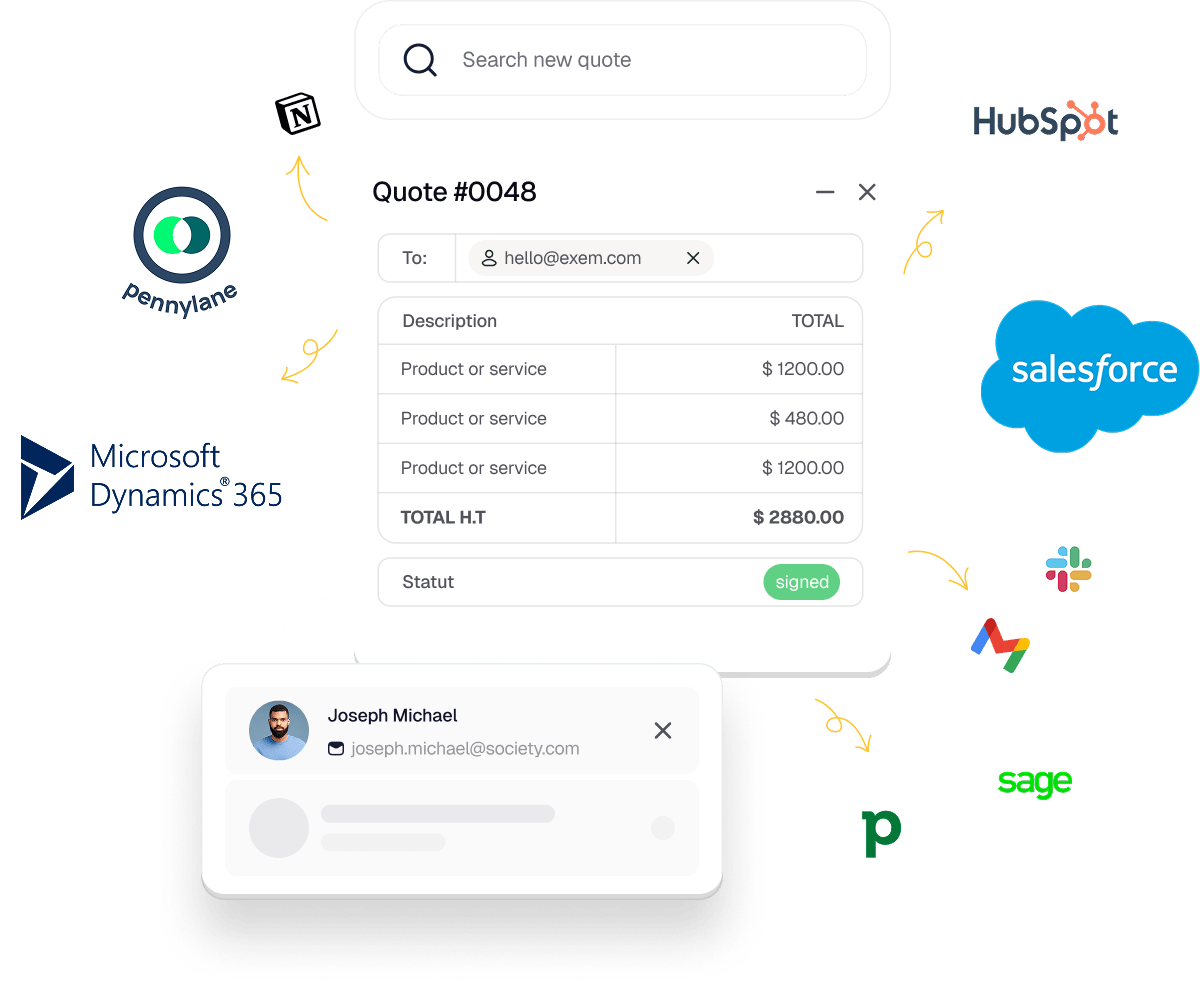
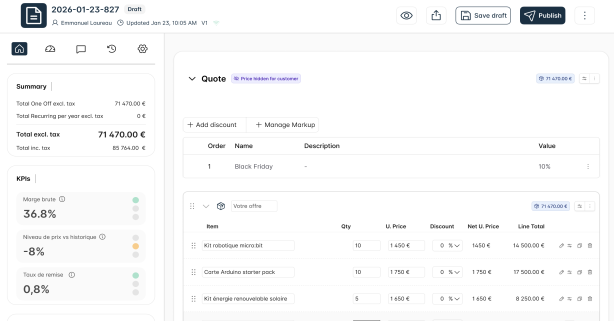
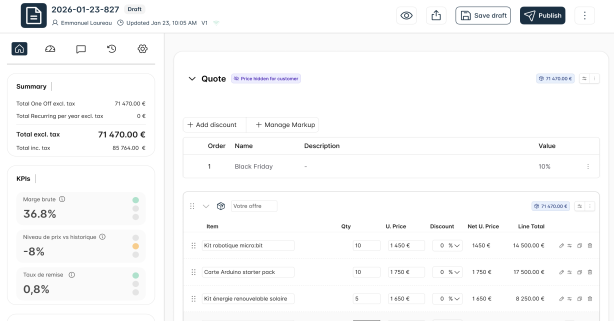
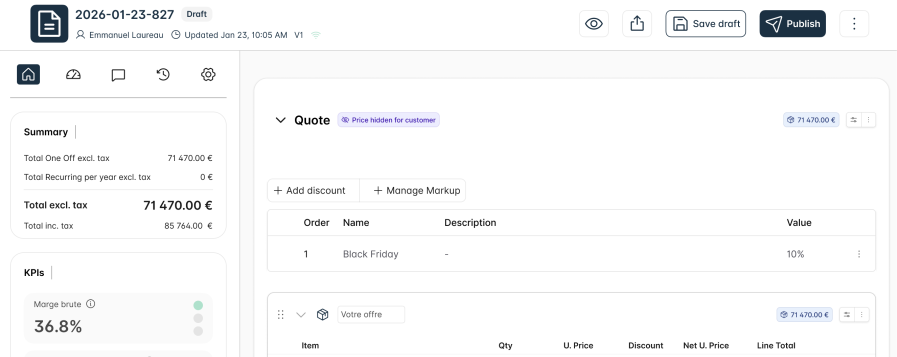
With Qwoty, Comerso’s team can now create personalized proposals quickly and without error. Pricing rules, product configurations, and discount structures are managed centrally and applied automatically — the rep focuses on selecting the right offer for this specific prospect, not on verifying that the numbers are correct.
The impact on prospect perception was immediate:
« This speed and accuracy made a strong impression on our prospects — aspects that are very well received from the very first contact. »
— Valérie Hordé, Head of Commercial Development, Comerso
In B2B sales — particularly when selling to large retail and distribution groups — the quality of the proposal is often read as a proxy for the quality of the product and the team behind it. A fast, accurate, well-presented proposal signals operational competence. For a company like Comerso, whose clients are enterprise-scale organizations with high expectations, that signal matters.
Deal tracking that enables proactive selling
Beyond the creation of proposals, one of the changes Valérie highlights most is the visibility Qwoty provides into how prospects engage with each offer — and what that enables the team to do with that information.
« Tracking interactions and personalizing communications allowed us to build stronger, more lasting relationships with our clients. Qwoty gives us an overview of exchanges and deal progress, which lets us adapt our approach and respond precisely to each client’s needs. With Qwoty, we have a tool that helps us better understand and serve our clients — and adjust our proposals proactively. »
— Valérie Hordé, Head of Commercial Development, Comerso
This is the DealRoom in practice. When a rep knows that a prospect has spent significant time on the pricing section but has not yet opened the contract terms, they have a clear signal about where the conversation needs to go next. That kind of visibility — knowing which sections of a proposal are attracting attention, which stakeholders have viewed it, and when — converts reactive follow-up into informed, timely intervention.
Replacing informal deal closing with a secure, frictionless signature process
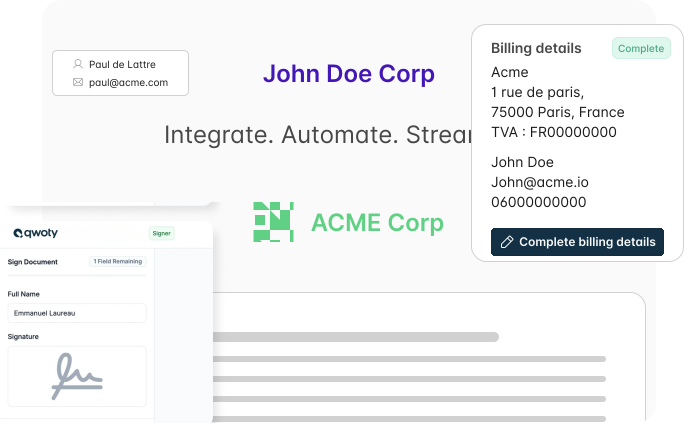
One of the most commercially significant changes Qwoty brought to Comerso was in how deals are formally closed. Before integrated e-signature, the pattern was familiar to many B2B sales teams: a prospect sends an email saying « agreed » or « sounds good » — a verbal or written indication of intent, but not a signed commitment. Following up to formalize that into an actual contract requires additional back-and-forth, introduces delay, and sometimes allows deals to slip.
« No more lengthy back-and-forth to collect signatures on commercial proposals, T&Cs, and contracts. Clients can now sign everything on a single platform, quickly and securely. This has not only accelerated our closing process but also improved client satisfaction by simplifying the steps on their side. We have also secured our partnerships by moving from an informal ‘agreed by email’ to a real signed commitment from the prospect — without it feeling any more complex to them. »
— Valérie Hordé, Head of Commercial Development, Comerso
The last point in Valérie’s quote deserves attention. Moving from « OK by email » to a legally binding signature is not just an operational improvement — it is a risk management improvement. An informal acknowledgment by email is not an enforceable commitment in most B2B contract frameworks. A signed document, collected through a certified e-signature process (eIDAS-compliant for European markets), is. Comerso made that shift without adding any complexity from the client’s perspective — the signing experience is simpler than the old email process, not harder.
The result: +15% close rate in the first semester
The cumulative effect of faster proposals, better deal visibility, and a streamlined signature process was measurable within three months. Comerso recorded a 15% increase in its close rate in the first semester following Qwoty’s implementation — a result directly attributable to the changes in how the commercial team creates, tracks, and closes proposals.
« Qwoty has not only modernized our sales processes — it has also transformed the buying experience for our clients. The benefits are tangible and the return on investment is undeniable. Our teams have even started calling themselves ‘Qwotyphiles.’ We strongly recommend Qwoty to any company looking to optimize its commercial efficiency and strengthen client engagement. »
— Valérie Hordé, Head of Commercial Development, Comerso
Why close rate improvements compound over time
A 15% increase in close rate does not just mean 15% more revenue from the same pipeline. It also means the same commercial team produces more output — more won deals per proposal sent, per call made, per rep employed. At Comerso’s growth trajectory, that efficiency gain scales with the business.
Key lessons for B2B companies scaling their commercial team
Comerso’s experience illustrates a pattern that is common for B2B companies moving from early-stage to structured commercial operations. The manual, informal processes that work for a small founding team become bottlenecks at scale — and fixing them has a disproportionate impact on revenue performance.
Proposal quality is a conversion lever. Speed and accuracy in proposal delivery affect close rates directly — not just operationally, but in how prospects perceive the company’s competence. A well-presented, error-free proposal delivered quickly positions the company well before any negotiation begins.
Engagement data changes how teams follow up. Knowing which sections a prospect has reviewed, how many stakeholders have accessed the proposal, and how much time they have spent on specific content transforms follow-up from guesswork into informed action. That visibility is one of the least obvious but most impactful benefits of a DealRoom-based selling approach.
Formalizing the close does not have to add friction. Moving from informal email agreements to signed contracts is both a legal improvement and a commitment signal — and it does not require making the process harder for the buyer. Integrated e-signature, when done well, is simpler than the alternative, not more complicated.
FAQ
How does a CPQ tool directly improve close rates?
A CPQ tool affects close rates through several mechanisms. Faster turnaround on proposals keeps momentum in active deals and reduces the window for prospects to reconsider or engage a competitor. Error-free, well-presented proposals signal professionalism and reduce the objection surface. And engagement analytics from the DealRoom give reps the ability to follow up at the right moment with the right message — rather than sending generic check-in emails on an arbitrary schedule.
What is the difference between an « agreed by email » and a signed contract — and why does it matter?
An informal agreement by email is generally not an enforceable contract in most B2B legal frameworks. It establishes intent but not commitment. A signed contract — particularly one collected through a certified e-signature process like eIDAS (Europe) or UETA (US) — is legally binding and creates a clear, traceable record of the agreed terms. For companies selling to enterprise clients, the distinction matters for revenue recognition, dispute resolution, and partnership security.
How does DealRoom engagement analytics help close deals?
Qwoty’s DealRoom tracks how prospects interact with each proposal: which sections they viewed, how long they spent on each, how many people accessed the document, and when. This data allows reps to prioritize follow-up on active deals, identify where a prospect has questions or concerns based on where they spent time, and adapt their next conversation accordingly — rather than following up blind.
Is Qwoty relevant for companies that sell complex, multi-product proposals to enterprise clients?
Yes. Qwoty’s CPQ module supports complex catalog structures — multiple product lines, tiered pricing, volume discounts, client-specific pricing rules — and applies them automatically when a proposal is built. For teams selling to enterprise accounts where proposals involve multiple product configurations, approval workflows, and negotiated terms, the consistency and speed benefits are particularly significant.
How quickly can a growing B2B company expect to see results after implementing a CPQ tool?
Comerso saw a 15% improvement in close rate within three months. Results vary depending on starting point, team size, and how deeply the tool is integrated into the workflow — but teams that replace manual, multi-platform proposal processes with a centralized CPQ workflow typically see efficiency gains within the first few weeks. Conversion improvements follow as the team develops habits around engagement analytics and faster follow-up. See Qwoty’s plans for implementation details.